As education evolves in response to the rapidly changing demands of the 21st century, authentic learning has become a key focus for educators and institutions. Authentic learning emphasizes real-world relevance, critical thinking, problem-solving, and collaboration, preparing learners for the complexities of modern life and work. The future of authentic learning is being shaped by emerging trends that are redefining how we teach and learn. In this blog post, we’ll explore the key trends driving the future of authentic learning and what educators can expect in the coming years.
1. Integration of Technology and Real-World Learning
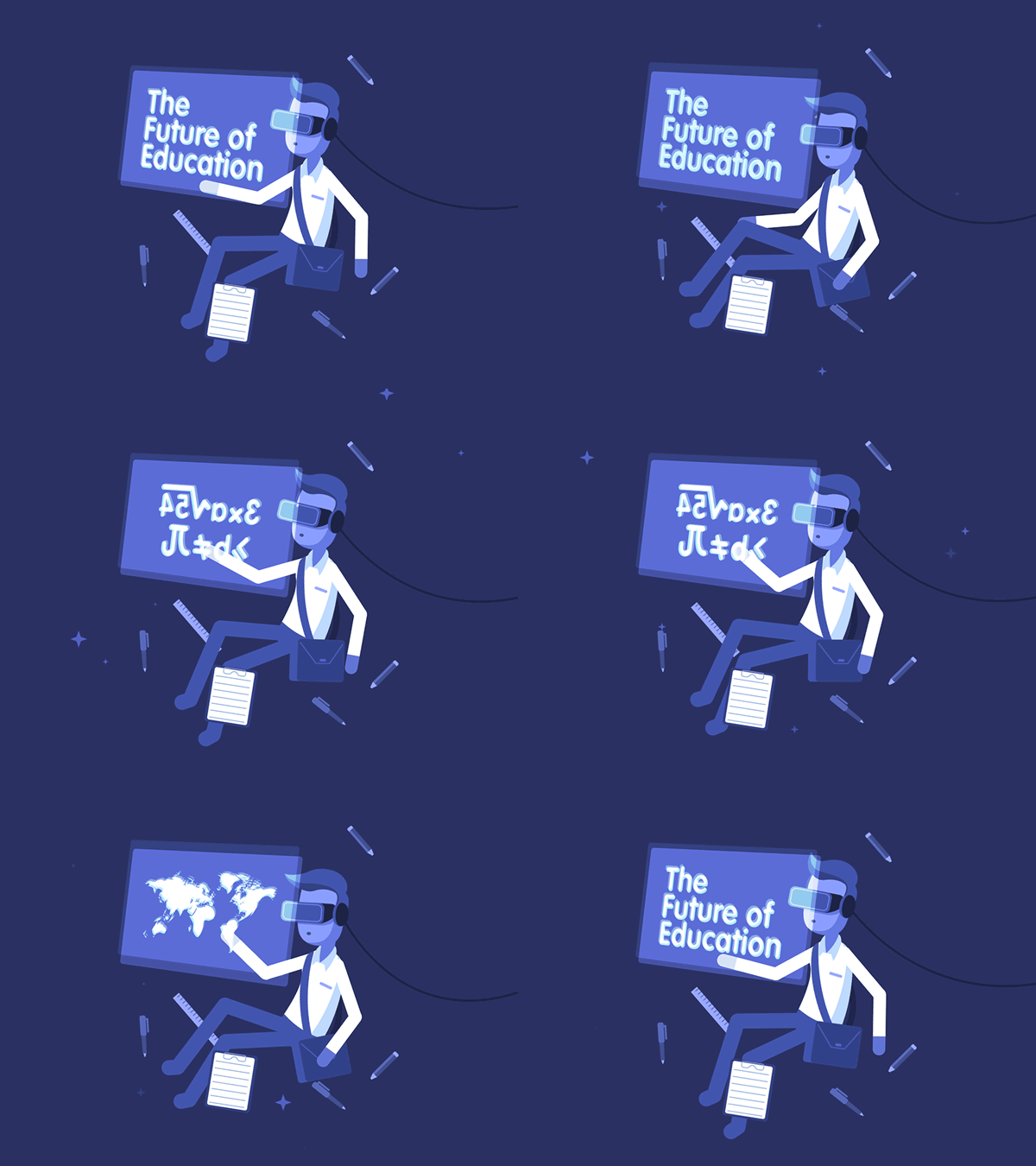
Technology continues to play a pivotal role in advancing authentic learning experiences. Virtual reality (VR), augmented reality (AR), and artificial intelligence (AI) are transforming how students interact with content, making learning more immersive and hands-on. These technologies allow learners to simulate real-world environments, perform complex tasks, and engage in experiential learning in ways that were previously impossible.
For instance, VR and AR can recreate real-world scenarios, such as virtual field trips, medical procedures, or architectural design, allowing students to apply their knowledge in practical contexts. AI-powered tools can provide personalized feedback, helping learners to improve problem-solving skills in real-time.
Example: Google Expeditions, an AR/VR platform, enables students to explore historical landmarks, deep oceans, or even outer space from their classrooms, giving them a first-hand experience that mirrors real-world learning (Google for Education, 2023).
2. Project-Based and Inquiry-Based Learning
Both project-based learning (PBL) and inquiry-based learning are gaining prominence as effective strategies for fostering authentic learning. In these models, students work on long-term, meaningful projects or investigate real-world questions, often collaborating with peers or external experts. The emphasis is on learning through exploration, experimentation, and problem-solving rather than rote memorization.
In the future, more schools and universities are expected to adopt PBL as a standard instructional method, as it aligns with the skills needed for the 21st-century workforce, such as collaboration, communication, and innovation.
Example: Schools like High Tech High in San Diego, California, have integrated project-based learning throughout their curriculum, with students working on interdisciplinary projects that solve real community problems (High Tech High, 2023).
3. Learning Outside the Classroom
The shift toward more authentic learning experiences is increasingly blurring the lines between the classroom and the real world. More educational programs are incorporating community-based learning, internships, and partnerships with local businesses and organizations. These experiences give students opportunities to apply their learning in practical settings, further developing their skills and understanding.
With remote learning technologies now more robust, students can engage in authentic learning outside traditional school environments. For example, students can participate in virtual internships, work on global collaborative projects, or engage with local communities through online platforms.
Example: Outward Bound programs emphasize outdoor education and experiential learning, where students are challenged to solve real-world problems in wilderness settings, helping them build resilience and teamwork skills (Outward Bound, 2023).
4. Personalized Learning Pathways
One of the key trends shaping the future of authentic learning is personalization. As learners’ needs become more diverse, educational institutions are moving away from one-size-fits-all approaches to create more tailored learning experiences. Personalized learning pathways allow students to engage with content that is relevant to their interests, skills, and future career aspirations.
Technology plays a crucial role in this personalization. Adaptive learning platforms, powered by AI, can analyze student performance and suggest customized learning activities, ensuring that each learner receives instruction that meets their individual needs.
Example: Platforms like Knewton use adaptive learning technology to create personalized learning experiences by analyzing student data and adjusting content in real time to optimize learning outcomes (Knewton, 2023).
5. Collaborative and Global Learning
The future of authentic learning is increasingly collaborative and global. As the world becomes more interconnected, students are working together across borders to solve common challenges. Global collaboration projects, where students from different countries work on shared goals, help foster cross-cultural understanding and prepare students for a globalized workforce.
With advancements in digital communication tools, students can now collaborate in real time with peers from other parts of the world. This trend emphasizes teamwork, cross-cultural communication, and the ability to work in diverse environments—critical skills for the 21st century.
Example: The Global School Alliance connects classrooms from across the globe, enabling students to collaborate on projects, share ideas, and learn about each other’s cultures through authentic, real-world interactions (Global School Alliance, 2023).
Conclusion
The future of authentic learning is bright, driven by emerging trends that make education more immersive, personalized, and connected to the real world. As educators continue to adopt project-based learning, leverage technology, and create global learning opportunities, students will be better prepared to face the challenges of the modern world with critical thinking, creativity, and practical skills. By embracing these trends, educators can ensure that their learners are equipped for success in an ever-evolving global landscape.
Comments
Post a Comment